Division is weakness. Fragmentation is death.
– The Caldera Charter –
Ask any Driftborn where they call home and most will answer with the name of their Shard. Skivik, Ebonlake, Apexia, Buckle Point…
Ask them who they are, however, and most will answer with a different word entirely: Driftborn.
Three centuries after the Shattering, the Union of Caldera is the sole nation in the known Archipelago. Stretching across dozens of inhabited Shards, it binds together settlements separated by the hazardous and unpredictable Mists. Goods move between communities, information travels faster than ever before, and the Driftborn enjoy a level of safety and prosperity their ancestors could scarcely imagine.
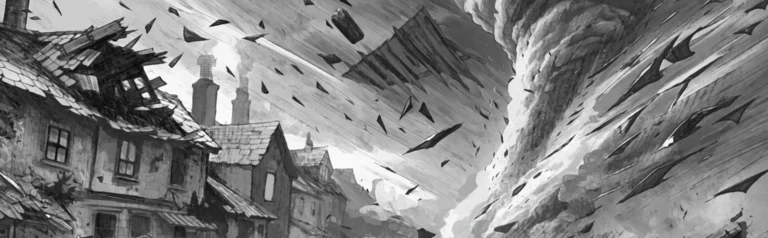
In the years following the Shattering, survival was uncertain. Isolated communities struggled. Shards were unstable, Sliverstorms were far more common than they are today, and even basic survival could not be taken for granted. Communities fought to secure food, shelter themselves from the elements, and defend against those driven to violence by desperation. Contact between settlements was sporadic and often dangerous.
According to Union records, it was Godfrey Harcourt who first recognised that lasting survival would require more than individual communities struggling alone. He led his own group to safety and founded the great city of Caldera. It grew into a place of refuge, and example to all other survivors of what cooperation could achieve. Quickly, nearby settlements encountering similar challenges, reached out and partnerships were formed. Harcourt opened trade routes and shared resources. Mutual defence agreements followed. Over time, these relationships formed the foundation of what would become the Union of Caldera.
Today, the Union governs through the Reclamation Council, where recognised territories, guilds, and leagues hold representation. Though local governments retain authority over regional affairs, all are ultimately bound by the Caldera Charter, the foundational document that defines law, citizenship, and civic duty throughout the Archipelago.
Citizens of the Union enjoy numerous protections and privileges. Public education, healthcare, transportation, voting rights, and legal protections are available to those who have earned citizenship through service and contribution to society. Citizenship itself is not as a birthright, but earned as proof of commitment to the collective good.
Alas, not all who live beneath the Union’s banner are citizens.
A part of the population are Callow, individuals who have not yet earned their citizenship. Though Callow may work, own businesses, and raise families, their legal protections and opportunities remain more limited than those afforded to full citizens. For many, earning citizenship represents one of life’s greatest ambitions.
Supporters of the system argue that these expectations create a society built on responsibility, contribution, and mutual support. Critics question whether a person’s worth should be measured by service alone. As with many aspects of Union life, opinions tend to vary depending on whom you ask. What few will deny is the scale of the Union’s success and how quickly and efficiently it has returned civilised society after the Shattering.
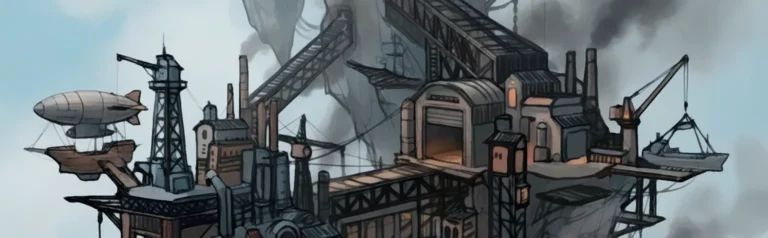
In the Time of Reclamation, survivors struggled to endure another winter. Today, airships cross the skies between thriving settlements, wireless messages travel between distant Shards, and goods move across an interconnected economy spanning the entire Archipelago. The scars of the old world remain, but many view the Union the reason that civilization endured.
“Without a central anchor, the Archipelago would revert to fear-driven isolation. The Union prevents a return to chaos.”
– Magistrate Hill –