Tumbling down the rabbit-hole
How do you actually define a world?
This question troubled me more than I expected. After all, the setting already existed in my head. I knew there were floating Shards in the Mist. I knew there were dirigible airships crossing the Archipelago, Victorian cities with a magitech flair, and Noxis-affected creatures hiding in the ruins of a previous age.
The industrial-age architecture was easy to find. Luckily for me, Belgium is blessed with a rich patrimony from that particular age. I could go out and be inspired. When I started adding the fantasy elements and the particularities of my world, however, I quickly ran into trouble. While Driftborn fits the steampunk definition, blending 19th-century Victorian elegance with advanced, steam-powered machinery, steampunk also implies a level of spectacle that felt disconnected from the grounded world I wanted to build.
The same problem popped up when I started designing the actual Shards, when I started defining the Mist, and when I thought about Sliverstorms and their consequences for architecture. Every single time, I fell down the same (cat?)rabbit-hole:
What would it actually look like if this were a real thing? Would people actually build this? How would society be affected? These rabbit holes went ever deeper. Architecture was just one of many aspects of Driftborn that required my attention. It’s very easy to say the Mists surround every Shard, but when you actually consider it, a number of questions immediately assert themselves.
What about sunlight?
What about the horizon?
What about the day-night cycle?
Tumbling down further, we arrive at the effects of these different setting elements on the ecosystem. Which creatures would, or could, survive the Shattering? What are the effects of dividing the world into isolated chunks with limited space? What happens when direct sunlight becomes a rare commodity? What about gravity and basic physics?
Some might say, “Well, it’s fantasy. Don’t worry about it. Anything is possible.”
But the fact is that I did worry about it. The world in my head feels real to me, and I wanted it to feel real to you as well. So, instead of simply designing by the Rule of Cool, I allowed myself to explore one rabbit-hole after another, writing explanations for how and why things worked. While it was definitely the long way around to arrive at the shape Driftborn eventually took, it had a surprisingly large impact on the way the setting developed.
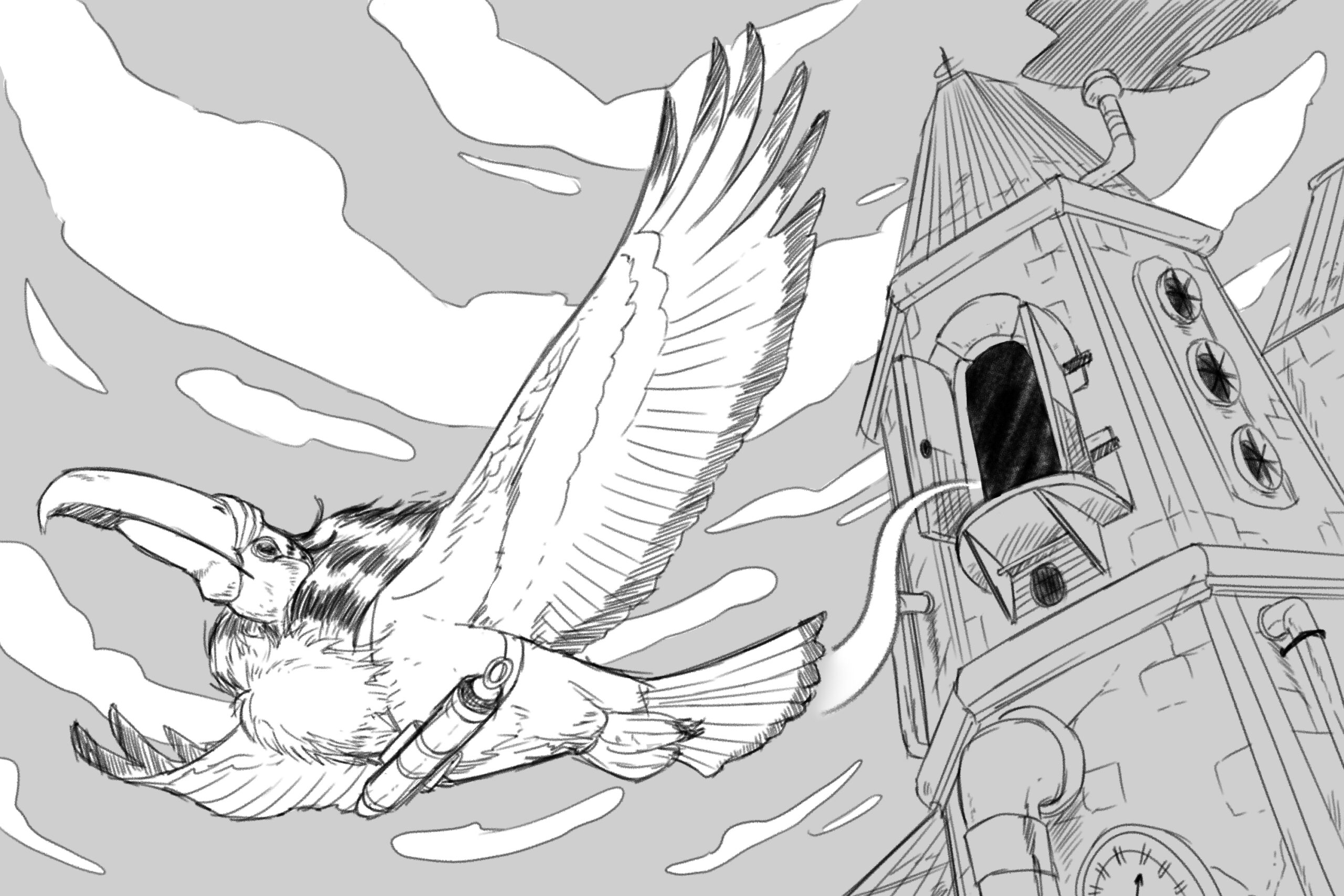
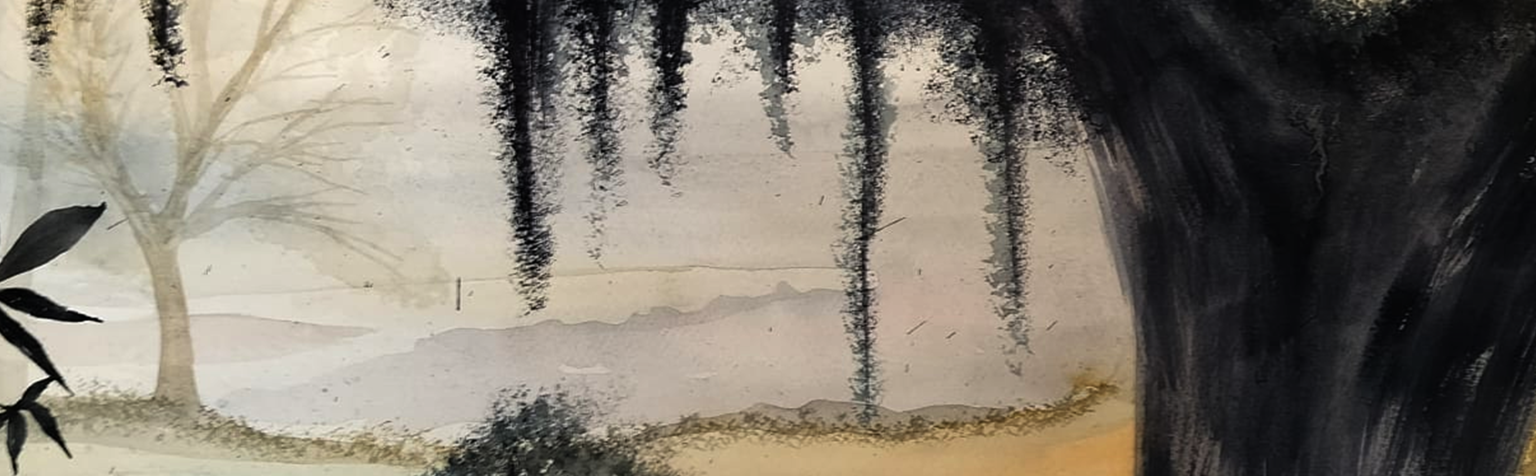
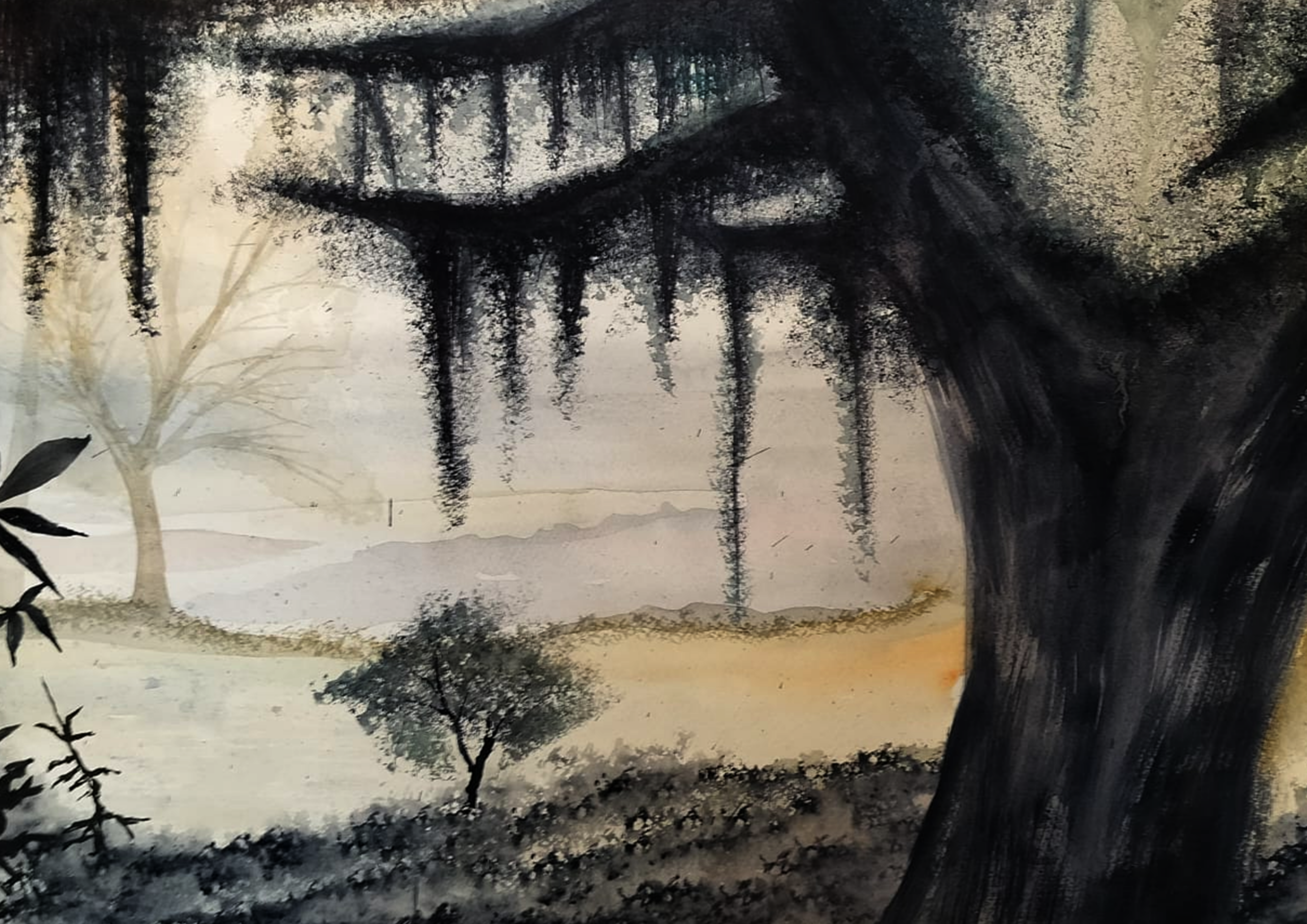
Take the image in this blog post, for example. I call it “The Verge.”
Because of the perpetual presence of the Mists, Driftborn society has little use for a word like “horizon”. Why would they? Most Driftborn children will never see one. However, I couldn’t just make the concept disappear because I felt like it. I kept encountering situations where I needed it. “She stared at the horizon. Expand your horizons. Something appeared on the horizon.” There were simply too many instances of its use. I felt I needed another word that could fill that void.
Hence, “the Verge”, the Driftborn equivalent of the horizon.
Technically, it still means much the same thing. It’s the limit of one’s perception, the line in the distance where the land meets the sky. Add in the Mists, however, and it becomes something slightly different: the point where you can still clearly define what lies in the distance before it becomes obscured by the haze.
The more I explored those kinds of issues, the more Driftborn started to feel like a real place instead of a collection of cool ideas.
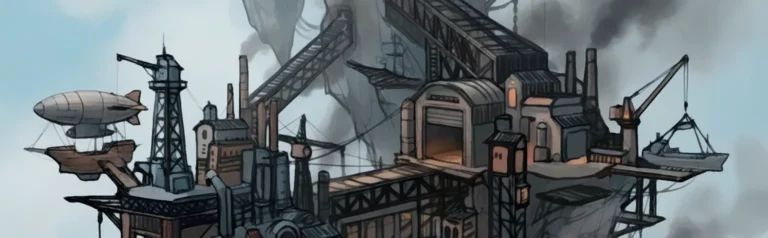
Another good example is Buckle Point. On paper, it’s little more than a cluster of floating rocks connected by industry and infrastructure. In practice, it became one of my favourite locations in the setting because it feels believable. Shipyards, warehouses, cranes, chains, smoke, and patched-together platforms all affect the people who live and work there. I think it’s beautiful not because it looks cool, but because you can imagine people actually living there: their habits, their lifestyles, and their attitudes.
The same process repeated itself throughout the setting. Questions about geography influenced creature design, transportation, weather, politics, and countless other details. Every answer raised new questions, and every question helped define the world a little further.
Looking back, I probably could have saved myself a lot of time by accepting things simply because they sounded interesting. But I’m glad I didn’t. Because all those questions, all those rabbit holes, slowly transformed Driftborn from a collection of ideas into something that feels lived in. Into something real.